
Employee Recognition in Australian Workplaces
Enhancing Employee Engagement in Australian Workplaces Through Effective Employee Recognition
Recognition isn't just a nice-to-have. It's one of the clearest levers you have for building a workplace where people stick around, do their best work, and actually want to be there. Engaged, appreciated people are more productive, more innovative, and more loyal — and that shows up in your bottom line, not just your culture survey.
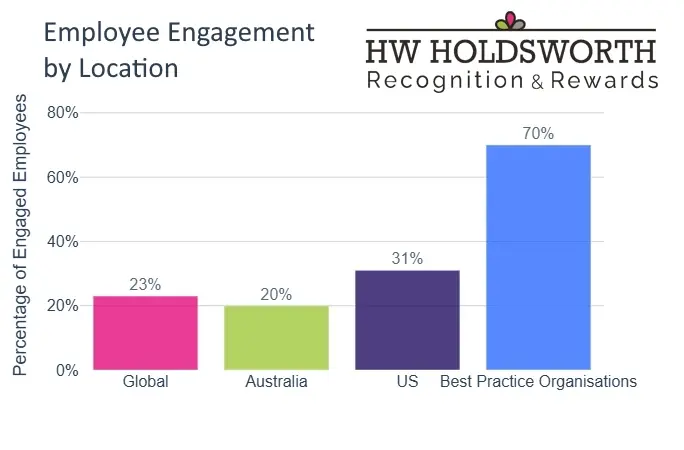
Right now, a lot of Australian workplaces are getting this wrong. Gallup's research puts the cost of employee disengagement to the Australian economy at $211 billion a year. That's not a small problem, and it's not one you fix with a one-off gesture. It takes a real strategy — one that fits your people, not a template borrowed from overseas.
Why employee recognition matters here
Most recognition advice you'll find online is written for a different market entirely. Australian workplaces have their own culture, their own regulations, and their own way of doing things — so the strategies that work here need to reflect that, not just translate a US or UK playbook.
Recognition ideas from Australian workplaces
You don't need to look overseas for good examples — plenty of Australian organisations are already doing this well. Here's how some of them approach recognition, and where you might start.
Peer-to-Peer Recognition
ANZ Bank runs a "Shout Out" program that lets employees publicly recognise colleagues for their contributions. KPMG Australia uses a peer nomination system where staff can call out colleagues who live the company's values, with winners receiving gift cards or extra leave.
Peer recognition works because it doesn't rely on a manager noticing — it spreads the responsibility (and the joy) across the whole team.
Non-monetary recognition & Perks
Atlassian gives staff "ShipIt Days" — 24 hours to work on a passion project, which doubles as a form of recognition and a shot of innovation. PwC Australia offers extra leave days, including birthday leave and volunteer leave. Canva has a "Vibe Team" whose whole job is organising team events, celebrations and appreciation activities.
None of these cost a fortune. They just take a bit of thought about what your people would actually value.
Formal recognition programs
Qantas runs its Excellence Awards each year, recognising standout employees across categories like innovation and customer service. Westpac has a structured program where top performers get national recognition at company events.
Formal programs give recognition a proper stage — useful when you want achievements to be seen and remembered, not just mentioned in passing.
Health and wellbeing-based recognition
Medibank ties recognition to wellbeing, offering subsidised gym memberships and mental health days. REA Group gives "Wellbeing Days" off as a way of rewarding strong contributions.
Recognising someone by looking after their wellbeing sends a clear message: we see the whole person, not just the output.
Social and public recognition
BHP shares employee success stories through internal newsletters and social channels. Coca-Cola Amatil Euro-Pacific marks work anniversaries with personalised gifts and public shout-outs on internal platforms — a milestone-focused approach that's close to how we work with clients every day.
Public recognition costs almost nothing and often means the most — everyone likes knowing their work anniversary didn't go unnoticed.
Career development opportunities
Telstra's talent recognition program gives high performers access to professional development and leadership training. Deloitte Australia runs a mentorship and sponsorship program pairing top performers with senior executives.
Sometimes the best reward is the chance to grow — recognition that invests in someone's future, not just their present.
Monetary rewards and incentives
Commonwealth Bank's "You Matter" program gives employees performance-based bonuses and lets them nominate peers for monetary rewards. Woolworths combines an employee discount program with performance-based rewards. Optus offers an annual bonus program and stock options for eligible staff.
Money matters, but it works best alongside the other forms of recognition on this list — not instead of them.
Recognition and psychosocial safety

Here's something worth knowing: inadequate reward and recognition is officially recognised as a psychosocial hazard in Australian workplaces (Safe Work Australia, Comcare). That means getting recognition right isn't just good culture — it's part of keeping your people safe and well.
In practice, that looks like regular, specific, positive feedback on how someone's doing their job. It looks like actually congratulating people, formally or informally, when they do good work. And it looks like listening — genuinely taking on board what your people need and are concerned about. Listening is a form of recognition too.

How to build a recognition program that actually works
Getting recognition right isn't about grand gestures. It's about consistency, and about knowing your people well enough to get it right for them. A few things worth doing:
- Work out what's actually worth celebrating for your team. The Victorian Public Sector Commission suggests running a team values workshop to land on shared values and behaviours together.
- Celebrate the small wins, in a way that fits how your people actually like to be recognised — not a one-size-fits-all approach.
- Don't forget the big milestones — long service, career anniversaries, retirement. These deserve real recognition, not a passing mention.
- Personalise it. Industry-specific or genuinely unique awards land better than something generic off a shelf.
- Keep it fair across every department and every level of experience.
- Bring your people into the process rather than deciding recognition for them.
- Respond quickly. Recognition loses its impact the longer it's left.
- Be upfront about how the program works — trust grows through transparency.
- Don't leave remote employees out of the loop.
- Ask your people what actually matters to them. The Victorian Public Sector Commission recommends surveying staff directly on their recognition and reward preferences, and running your own team values awards ceremony to build a culture of appreciation over time.
Recognition, done properly, changes things
Employee recognition in Australian workplaces isn't a nice extra — it's central to keeping people engaged, productive, and around for the long haul. The organisations that get this right aren't necessarily spending the most. They're the ones being consistent, genuine, and willing to know their people well enough to get recognition right for them.
That's exactly the kind of work we've been doing alongside Australian organisations for decades. If you'd rather have a partner who knows this space handle it with you than build it all yourself, we're an easy conversation away.
References
- ANZ Image credit: https://www.reuters.com/markets/deals/australias-competition-regulator-says-proposed-anz-suncorp-merger-shows-need-2024-02-20/
- Gallup. (2023). Employee disengagement is costing the Australian economy $211 billion per year - HRM online. HRM online.
- Safe Work Australia. Inadequate reward and recognition. Retrieved from https://www.safeworkaustralia.gov.au/safety-topic/managing-health-and-safety/mental-health/psychosocial-hazards/inadequate-reward-and-recognition#:~:text=Inadequate%20reward%20and%20recognition%20means,winning%20an%20award%20at%20work.
- Comcare. Inadequate reward and recognition. Retrieved from https://www.comcare.gov.au/safe-healthy-work/prevent-harm/psychosocial-hazards/reward-recognition
- Victorian Public Sector Commission. Reward and recognition. Retrieved from https://vpsc.vic.gov.au/toolkits
- Victorian Public Sector Commission. Run a team values workshop. https://vpsc.vic.gov.au/toolkits/wellbeing/activities-tools/run-a-team-values-workshop/
- Victorian Public Sector Commission. Survey your staff on recognition and rewards. Retrieved from https://vpsc.vic.gov.au/toolkits
- Victorian Public Sector Commission. Hold your own team values awards ceremony. Retrieved from https://vpsc.vic.gov.au/toolkits/toolkit/activities-tools/hold-your-own-team-values-awards-ceremony/
- Indeed.com. (n.d.). What is Employee Reward and Recognition? (With Differences) Retrieved from https://au.indeed.com/career-advice/career-development/reward-and-recognition#:~:text=Employers%20often%20give%20their%20employees,appreciate%20their%20employees'%20ongoing%20contributions.
- Randstad Australia. What impacts employee engagement | Randstad Australia. Retrieved from https://www.randstad.com.au/hr-news/employee-engagement/what-impacts-employee-engagement/